Most Incoterms explanations stop at a definition. EXW means the seller hands the goods over at the factory door. FOB means the seller's responsibility ends once the goods are loaded on the vessel. That's accurate and almost useless, because it doesn't show what the difference actually costs or who's exposed to what risk along the way.
In short: the Incoterm on a quotation sets the exact point where cost and risk pass from seller to buyer, not the total cost of the shipment. Moving from EXW toward DDP shifts more of the logistics work and risk onto the seller, usually for a higher quoted price. Which one is right depends less on which sounds safer and more on how much of the logistics chain you're set up to manage yourself.
The four Incoterms importers see most often
| Incoterm | Seller's responsibility ends at | Buyer arranges |
|---|---|---|
| EXW (Ex Works) | Factory door in China | Everything: export clearance, inland transport, ocean freight, import clearance, delivery |
| FOB (Free on Board) | Goods loaded on the vessel at the Chinese port | Ocean freight, insurance (if wanted), import clearance, delivery |
| CIF (Cost, Insurance & Freight) | Goods arrive at the destination port, insurance included | Unloading, import clearance, delivery |
| DDP (Delivered Duty Paid) | Goods delivered to the buyer's door, duties paid | Almost nothing; the seller handles the full chain |
Each step down this table hands more coordination, and usually more cost, to the seller. It doesn't make the total landed cost lower or higher on its own. It changes who is doing the work and who is exposed if something goes wrong at each stage.
A worked example, into the Port of Santos
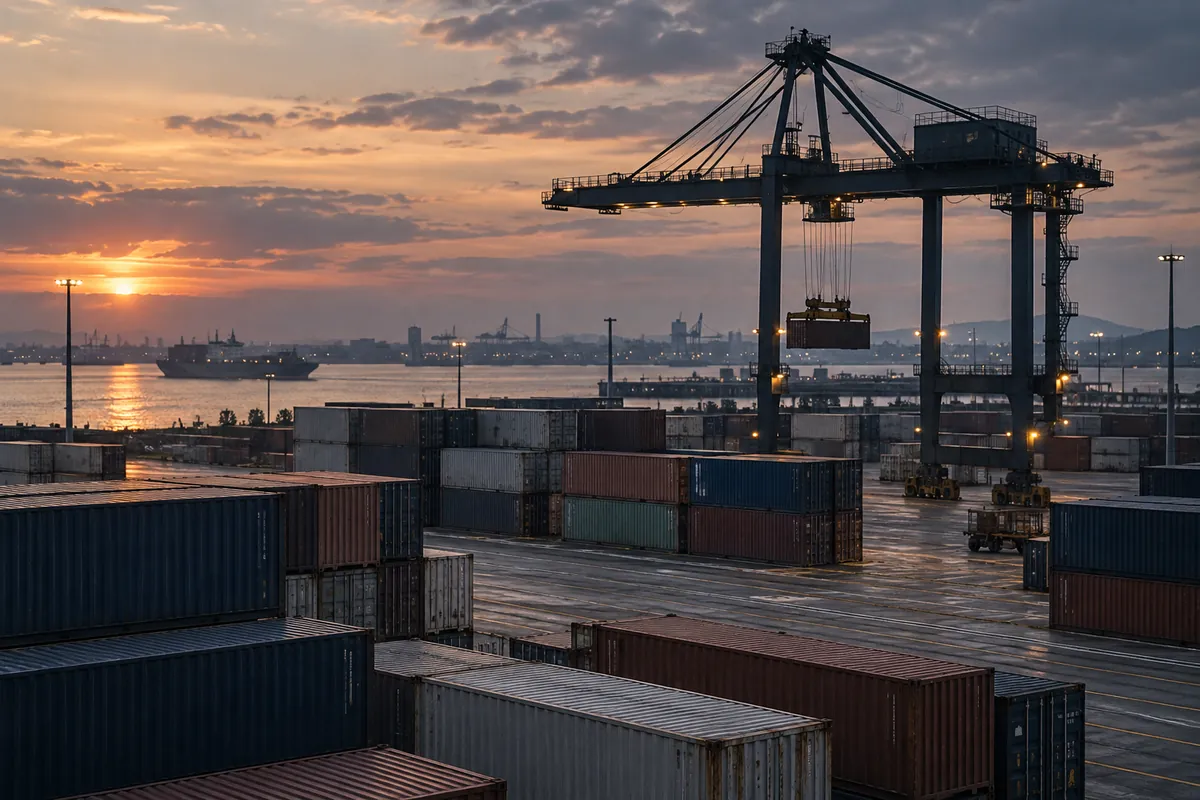
To make this concrete rather than abstract, here's an illustrative calculation for a shipment of furniture components from a factory in Foshan to the Port of Santos in Brazil, one of the busiest container ports in South America. These figures are round numbers for illustration, not a live quote, since actual freight and duty rates change by season, route and product.
Say the factory quotes the goods themselves at 10,000 units of value.
- EXW: the buyer's own cost starts here and adds inland trucking to the port, export documentation, ocean freight, marine insurance, destination port charges, import duties and inland delivery in Brazil, each arranged and paid separately, often through different vendors.
- FOB: the factory absorbs inland trucking and export clearance into its price. The buyer's added cost starts at ocean freight, and everything from the vessel onward is still the buyer's to arrange.
- CIF: the factory's price now also includes ocean freight and basic insurance. The buyer's first real cost appears at the Port of Santos: unloading, terminal handling, import duties, and inland delivery to a warehouse.
- DDP: the factory's quoted price already includes everything through delivery to the buyer's door in Brazil, duties included. The buyer's added cost is close to zero, but so is the buyer's visibility into how each of those components was priced.
The total landed cost across these four can end up similar. What changes is who is negotiating the freight rate, who is liable if the goods are damaged mid-transit, and who is dealing with Brazilian customs if a classification question comes up.
Why the "safest-sounding" option isn't always the best one
DDP looks the simplest for a first-time buyer, and in some cases it genuinely is the right call. But it also means trusting the seller's freight forwarder, the seller's customs broker on the receiving end, and the seller's judgment on documentation, all in a market the buyer may know better than the seller does. A buyer with an existing logistics relationship in their own country often gets a better outcome negotiating FOB or CIF and handling the last leg themselves.
Choosing the right one for where you are
FOB with your own forwarder is a common choice for a first order, because it puts import clearance and delivery, the part a local team usually understands best, in your own hands while letting the factory handle what it controls well: getting the goods onto the vessel correctly. EXW works well once a buyer has a reliable freight partner on both ends and wants full control and full visibility into every cost. DDP suits buyers who want a single number and are comfortable trusting the seller's logistics chain end to end.
Key takeaways
- The Incoterm sets where cost and risk transfer, not the total cost of the shipment.
- EXW gives the buyer maximum control and maximum coordination work. DDP gives the seller maximum control and the buyer minimum visibility.
- A worked example into a specific port, not a generic one, is the only way to see what each term actually shifts in practice.
- FOB or CIF paired with your own forwarder on the receiving end is a common middle ground for a first order into South America.
- Match the Incoterm to how much of the logistics chain you're actually equipped to manage, not to which term sounds the safest.
For orders that move through multiple industries and multiple ports, we set the Incoterm deliberately for each shipment rather than defaulting to the same one across every order, because the right choice depends on the route and the buyer's own logistics setup as much as on the product.