The useful question is which mode is cheapest or fastest for this specific shipment, at this weight, this volume, this deadline. Get the match wrong and either the freight bill or the delivery date suffers, sometimes both.
In short: sea freight is the default for anything bulky or heavy where the timeline allows weeks rather than days. Air freight earns its higher cost when time matters more than the freight bill, or when the shipment is light relative to its volume. Courier services make sense for samples, small parts, and urgent low-volume shipments, not for a full order.
Sea freight: the default for volume
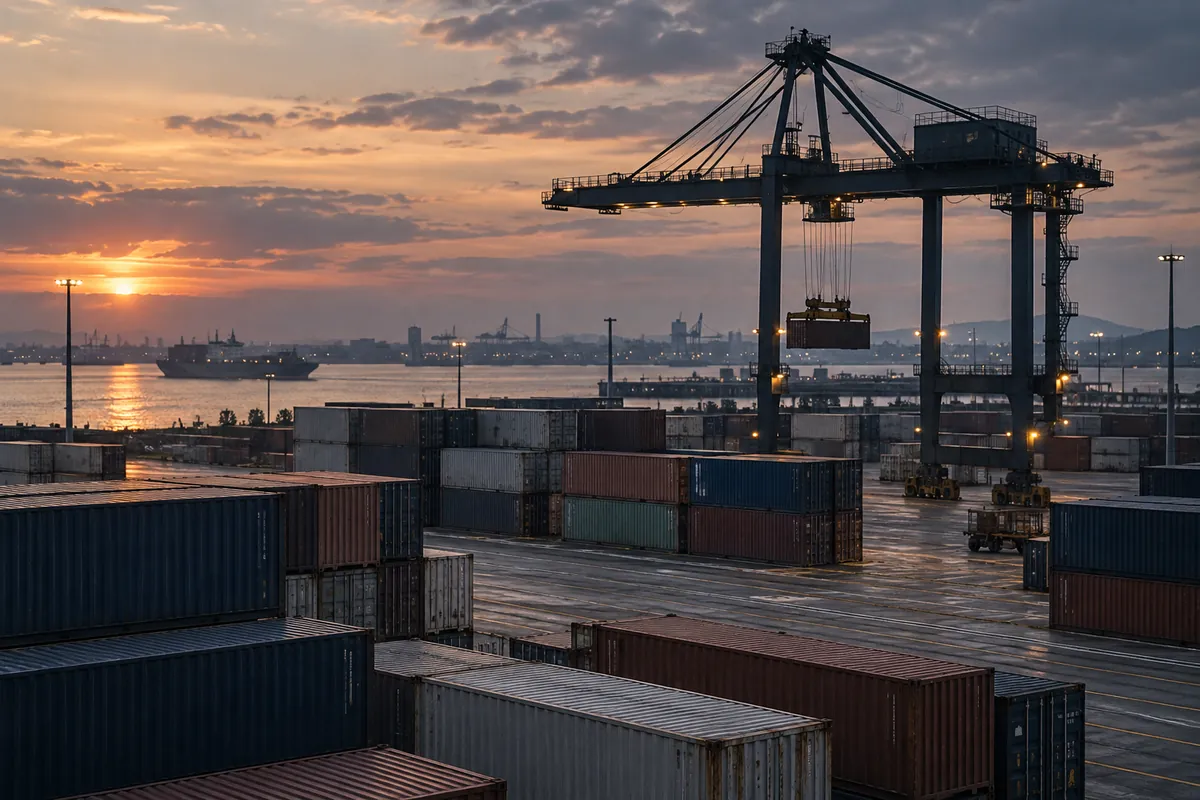
Ocean freight is priced by container or by cubic volume for smaller loads, and it's built for shipments where the per-unit freight cost needs to stay low. Furniture, fitness equipment, packaging materials and most bulky consumer goods move this way by default, because the transit time, typically several weeks depending on the destination, is manageable when the order is planned with enough lead time.
The trade-off is exactly that lead time. A sea shipment needs a production schedule and a demand forecast that account for weeks in transit, plus buffer time for customs and inland delivery on the receiving end.
Air freight: paying for time
Air freight costs significantly more per unit than sea freight, and the calculation that decides whether it's worth it usually comes down to urgency and the ratio of value to volume. A shipment that's light and compact relative to its value, and where a delay has a real cost (a stockout, a missed launch date, a contractual delivery deadline), can make air freight the cheaper option overall once the cost of the delay is factored in alongside the freight invoice.
Air freight is also priced on volumetric weight as well as actual weight, which means a bulky but light product can cost more to fly than its actual weight would suggest. This is worth checking before assuming air is only for small items.
Courier: built for small, urgent, and non-commercial volume
Courier services are the right tool for product samples, spare parts, documents, and genuinely small quantities that need to move fast with door-to-door tracking. They are rarely the right tool for a full commercial order, both because the per-unit cost is the highest of the three options and because the customs handling on larger courier shipments isn't built the same way as a standard commercial import.
The decision in practice
The choice usually comes down to three questions: how much does this weigh and how much space does it take up, how soon does it actually need to arrive, and what does a delay genuinely cost. A furniture order with a six-week lead time and a standard sea freight plan almost never benefits from air. A time-sensitive sample or a component needed to keep a production line running rarely benefits from waiting for a sea shipment.
Key takeaways
- Sea freight fits bulky, planned shipments where weeks of lead time are already built into the schedule.
- Air freight earns its cost when time matters more than the freight bill, or when volumetric weight changes the math.
- Courier is built for samples and urgent small quantities, not for commercial order volume.
- Decide the mode based on weight, volume, urgency and the actual cost of a delay, not on habit or on what was used last time.
Coordinating freight mode across multiple product categories, each with a different weight-to-value ratio and a different tolerance for delay, is a routine part of running logistics for a multi-industry supply chain.